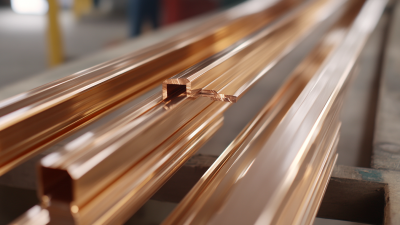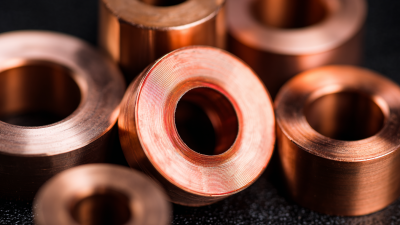
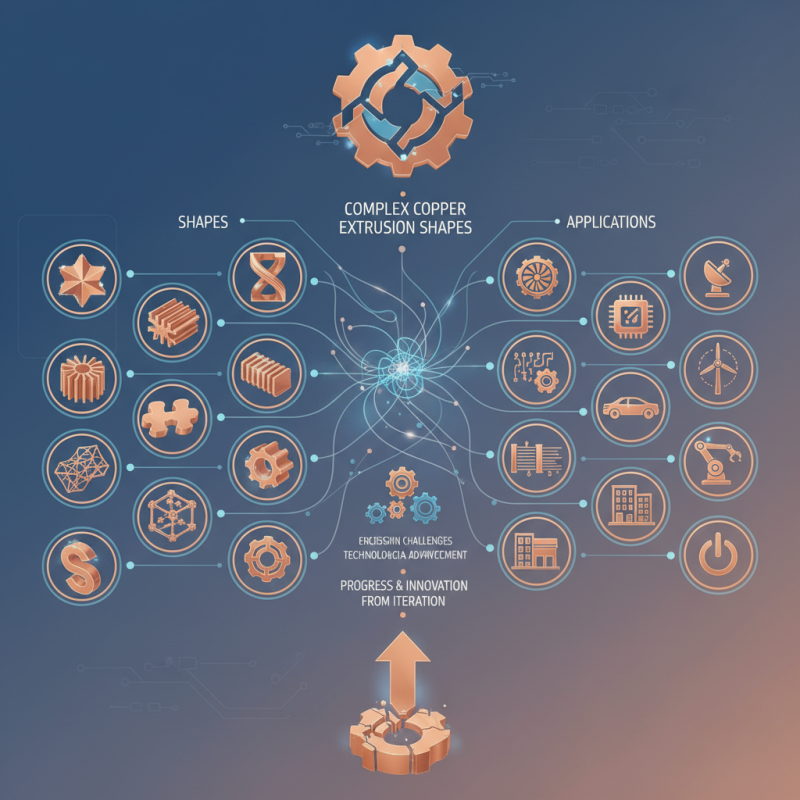
Nowadays, in the world of manufacturing, those Complex Copper Extrusion Shapesare pretty important across a bunch of different industries. Companies like Techcopper Innovations and Copper Dynamics have really pushed the boundaries with designs that break away from the usual. These intricate shapes aren’t just about functionality — they actually showcase how advanced engineering has gotten.
You’ll find these shapes pretty much everywhere — from telecom gear to Aerospace stuff. They help improve efficiency, no doubt. But let’s be honest: getting these shapes perfectly right during extrusion can be a real challenge. Engineers often struggle with maintaining consistency in the material or making sure the design can actually be produced. If shapes turn out flawed, it can cause big delays and headaches. So, finding that sweet spot between being creative and keeping things practical is super important.
As tech keeps moving forward, the need for innovative designs just keeps growing. Understanding what goes into those Complex Copper Extrusion Shapes is pretty crucial if you want to stay ahead of the game. And hey, it’s also good to remember that we've made mistakes along the way — learning from them is part of what drives progress. The path isn’t always perfect, but it’s how we get to create better stuff in the long run.
Copper extrusion is a highly specialized process. It involves forcing copper through a die to create various shapes. The process requires precise temperature control. Typically, the extrusion temperature ranges from 750°F to 1,200°F. This high temperature helps maintain copper's ductility.
The versatility of copper extrusion shapes is impressive. These shapes can be used in electrical components, plumbing fixtures, and even automotive parts. According to industry reports, the global copper extrusion market is projected to reach $15 billion by 2025. This growth reflects the increasing demand for lightweight materials in various industries. However, the extrusion process can be challenging. Flaws like surface defects and dimensional inaccuracies can occur.
Troubleshooting these issues requires careful monitoring of each stage. The pressing force must be appropriately balanced; too much pressure can cause breakage. Employing advanced technologies in the extrusion process can minimize risks. Yet, not all companies have access to such technologies. Incremental improvements in techniques and equipment can yield better results over time. Understanding these complexities can lead to advancements in the industry.
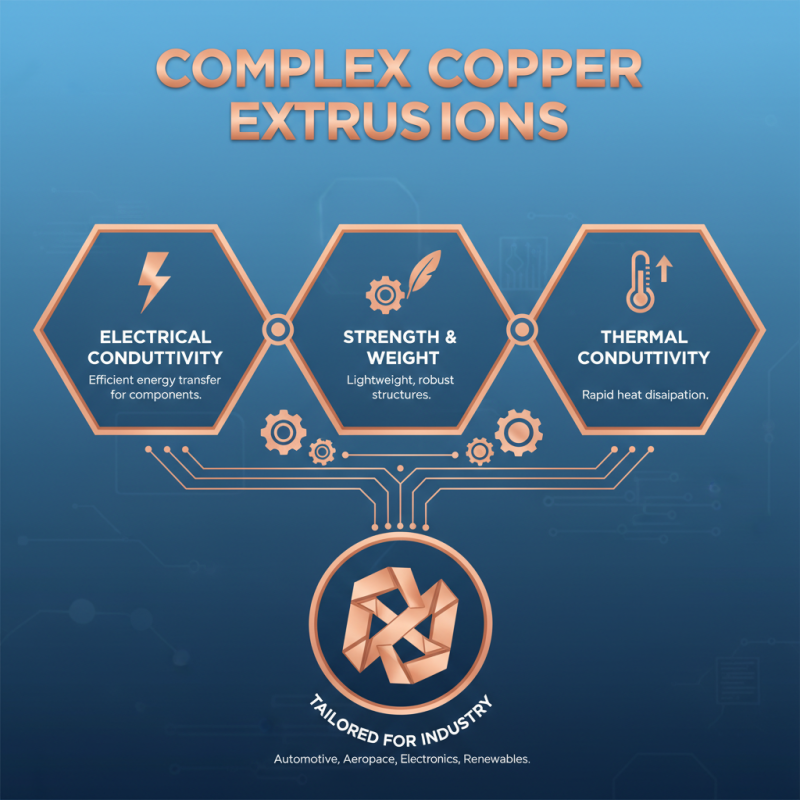
Complex copper extrusion shapes play a vital role in various industries. These shapes are tailored for specific applications, showcasing key characteristics that enhance their functionality. Copper extrusions can be lightweight yet incredibly strong, making them ideal for electrical components. Their excellent thermal and electrical conductivity allows for efficient energy transfer.
The versatility of Copper Extrusion Parts is noteworthy. They can be formed into intricate designs, such as heat exchangers and brackets. Each shape serves a distinct purpose, contributing to diverse systems in aerospace, automotive, and construction. However, creating these complex forms can be challenging. Designers often face difficulties in achieving precise dimensions. Sometimes, the material may warp or not meet the required specifications.
Despite these challenges, the applications for complex copper shapes are extensive. They are often used in cooling systems, electrical wiring, and medical devices. The need for innovation in copper extrusion is clear. As industries evolve, so must the design and production of copper extrusion parts. There is always room for improvement and reflection in this intricate process.
Copper extrusion is a fascinating process that yields complex shapes. These shapes find applications in various industries. For instance, architectural elements are often crafted from intricate copper forms. This enhances aesthetic appeal while providing durability.
Research indicates that over 60% of manufacturing sectors utilize Copper Extrusion Components. These include electrical systems, plumbing fixtures, and automotive parts. The versatility of copper allows it to be molded into unique geometries. Components like heat sinks and connectors are in high demand. They play a crucial role in electronic devices, ensuring efficient thermal management.
Moreover, the production of complex copper extrusion shapes has its challenges. Achieving precision in dimensions is not always easy. Issues may arise during the cooling phase, leading to warping. It's essential to refine the extrusion process continually. This will enhance the quality of the final products and meet strict industry standards. Understanding these complexities is vital for advancement in the copper extrusion sector.
Copper extrusions play a crucial role in electrical systems. Their unique shapes enhance conductivity and heat dissipation. According to industry reports, copper has the highest electrical conductivity of any non-precious metal. This makes Extruded Copper Shapes optimal for applications like wiring and connectors.
Complex extrusions can fit into tight spaces. They ensure better connections in circuits. Moreover, some shapes improve surface area, allowing for efficient heat transfer. For instance, fin-like designs are common in heat sinks. A study indicated that properly designed extruded copper shapes can reduce temperatures by up to 30%.
However, there are challenges. Production costs can be high for custom shapes. Additionally, quality control during extrusion is vital. Imperfections in the metal can lead to failures. To counteract this, manufacturers often perform rigorous testing. Despite these hurdles, the benefits of extruded copper shapes in electrical systems outweigh the drawbacks. They offer reliability and efficiency. Thus, innovation in this area continues to grow.
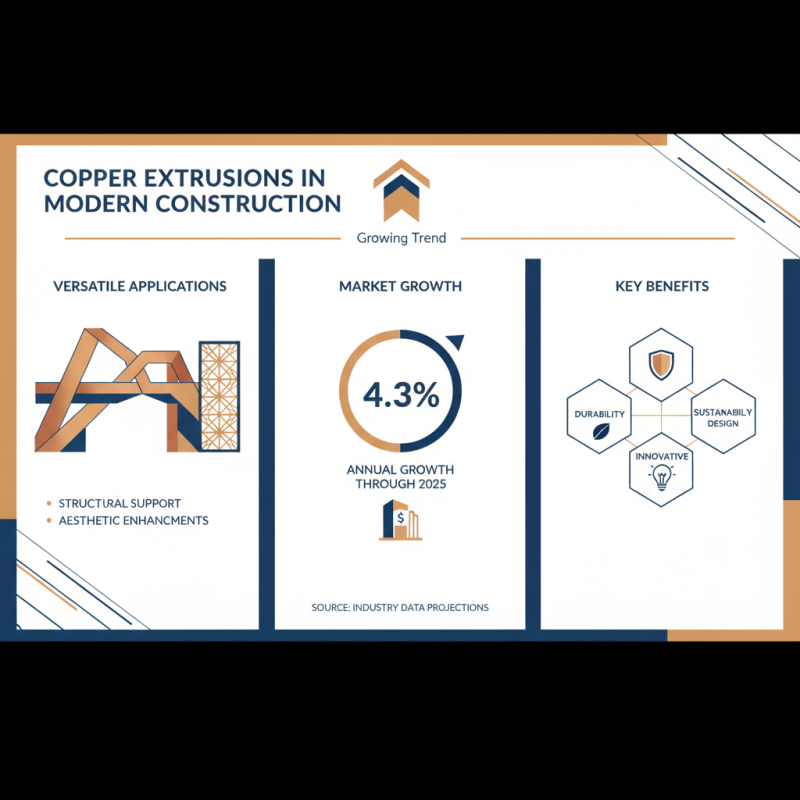
In the world of construction and architecture, complex copper extrusions are gaining traction. These shapes serve various purposes, from structural support to aesthetic enhancements. According to industry data, copper usage in construction is projected to grow by 4.3% annually through 2025. This trend highlights the significant role of copper extrusions in modern design.
Architects are increasingly using copper extrusions in facades and roofing systems. The material offers durability and resistance to corrosion, making it ideal for outdoor applications. Moreover, copper has excellent thermal conductivity. This enhances energy efficiency in buildings. For instance, a study found that buildings utilizing copper can save up to 15% on energy costs.
**Tip**: Use copper extrusions creatively. Unconventional shapes can elevate design uniqueness. Look beyond standard profiles to maximize aesthetic appeal.
While the advantages are evident, the production of complex copper shapes isn’t without challenges. The intricacy of designs can lead to increased manufacturing costs. Moreover, the availability of skilled labor to handle intricate designs may vary. This can impact project timelines and budgets, forcing architects to rethink their strategies.
**Tip**: Prototype complex designs early. This helps identify potential issues in production and ensures a smoother execution phase. It allows for adjustments to be made before finalization.
Innovations in copper extrusion techniques have transformed manufacturing processes in various industries. Recent studies indicate that the global copper extrusion market is projected to reach $15 billion by 2025, driven by advancements in technology and increasing applications. New methods, such as direct extrusion and impact extrusion, allow for complex Copper Extruded Shapes, which enhance performance and efficiency.
The automotive industry significantly benefits from these advancements. Complex copper extruded shapes are critical in electric vehicle (EV) components, providing lightweight yet strong solutions. For example, specialized heat exchangers made from these shapes improve thermal efficiency, which is essential for battery management systems. Each piece plays a vital role.
Despite the potential, challenges remain. Not all manufacturers have access to the latest technologies, which can lead to inconsistencies in quality. Some producers may struggle with the intricacies of complex designs, resulting in higher scrap rates. This inefficiency impacts overall profit margins. Thus, while the future looks promising, it is necessary to develop solutions that bridge the gap between innovation and practical application in copper extruded shapes.
This chart illustrates the number of applications for the top 10 complex copper extrusion shapes, showcasing their versatility and importance across various industries.
The future of copper extrusion shapes is evolving rapidly. As industries push for more efficient materials, custom shapes are gaining prominence. According to a recent market report, the global copper extrusion market is expected to grow by 4% annually. This shift emphasizes lightweight designs tailored for specific applications.
Innovative shapes meet the demands of renewable energy. For instance, intricate profiles now serve solar panel frames and electrical components. These shapes enhance energy efficiency while reducing production costs. Yet, the journey is not seamless. Manufacturers face challenges in adapting to new technologies. Constraints in material properties often limit design possibilities.
Sustainability is another driving force. More companies are prioritizing eco-friendly practices. Reports suggest that 60% of industry leaders consider recycled copper as a primary source. As demand grows for sustainable products, extrusion techniques must evolve. This requires investment in surface treatments and alloying processes to ensure durability. The road ahead is complex, but it may lead to breakthroughs that reshape industries.
| Shape | Description | Common Applications | Future Trends |
|---|---|---|---|
| Hollow Pipes | Cylindrical shapes with varying diameters. | Plumbing, HVAC systems, and electrical applications. | Increasing use in renewable energy applications. |
| Profiles | Complex cross-sections for various functions. | Industrial machinery and automotive components. | Customization for specific industry needs. |
| Fittings | Elbows, tees, and adapters. | Piping systems in various sectors. | Innovations in leak-free technologies. |
| Wire and Cable | Stranded or solid wire for conductivity. | Electrical applications in power and telecommunications. | High-performance materials for efficiency. |
| Heat Exchangers | Bundles or coils designed to transfer heat. | Air conditioning and refrigeration systems. | Trends towards energy-efficient designs. |
| Radiators | Copper-based systems for heat dissipation. | Automotive and electronic cooling. | Integration with smart technology for temperature control. |
| Busbars | Conductive materials used to distribute electric power. | Power generation and distribution systems. | Developments in smart grid technologies. |
| Cylinders | Hollow structures for pressure applications. | Hydraulic and pneumatic systems. | Increase in lightweight alternatives. |
| Plates | Flat sheets for various uses. | Construction, electronics, and art. | Adoption in sustainable building practices. |
| Custom Shapes | Shapes tailored for specific products. | Unique applications across various industries. | Increased flexibility in manufacturing processes. |
: The content aims to provide clear and useful information for readers.
Anyone seeking guidance on the discussed topics can find value in the content.
The content is relevant to a broad audience, with no specific group excluded.
The content strives for accuracy, but readers should verify facts independently.
Readers are encouraged to think critically and reflect on the presented ideas.
The tips may not suit every individual or situation; personal context matters.
Yes, the content provides specific instances to illustrate key points.
It’s important to express differing opinions and explore alternative viewpoints.
Updates may occur periodically; however, no specific schedule is guaranteed.
Feedback is welcomed, and readers are encouraged to report any inaccuracies.
The article "Top 10 Complex Copper Extrusion Shapes and Their Applications" provides a comprehensive overview of the copper extrusion process, highlighting its key characteristics that enable the creation of complex shapes. With an emphasis on the intricate designs that can be achieved, the article outlines the top ten complex copper extrusion shapes, detailing their unique attributes and how they cater to various industry needs.
Moreover, the discussion extends to the applications of these complex copper extrusion shapes in electrical systems and construction, underscoring their significance in modern architecture. The article also explores innovations in extrusion techniques and anticipates future trends that may shape the industry. Overall, complex copper extrusion shapes not only exemplify advanced manufacturing capabilities but also play a crucial role in advancing technology and infrastructure.